There is nothing lovelier than puppies. Cute, fluffy, enthusiastic puppies. Think of the Dalmation – that canine bundle of spots and energy – and you feel even better. And the only thing more delightful than one Dalmation puppy? 101 Dalmation puppies.
But, with every beautiful daydream of being surrounded by a posse of spotted pups, comes the lurking shadow of Cruella de Vil.
In this month’s ‘Who needs coaching?’ article, let’s briefly examine what Cruella de Vil might have discovered about herself if she’d engaged with a professional coach.
“Looking good is better than being good.”
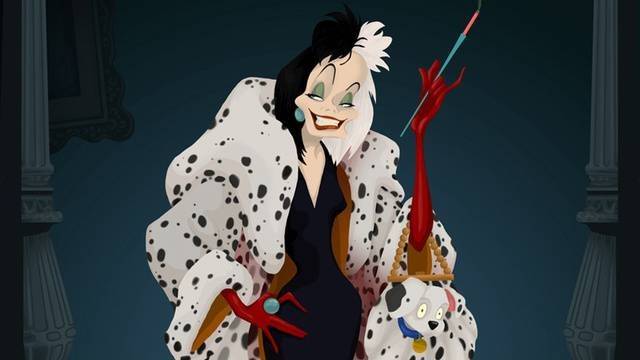
Materialistic, wealthy, and fashion-obsessed, Cruella de Vil is the iconic villain of 101 Dalmatians. She adores fur coats and attention, oozes style and power, and dominates both her husband and her employees. She is strong, intelligent, unflinching in her boldness and, unusually for the 1950s, child-free by choice.
She exhibits a definite zest for life, but has an unapologetically selfish nature.
Because she is arrogant and domineering, Cruella has no friends and no social circle to speak of; relying on a team of incompetent henchmen to do her dirty work. And because she tends to act on impulse, and is a poor leader of those around her, chaos tends to follow her wherever she goes, culminating in failed efforts.
Are bad leaders actually coachable?
Of course! But theirs is a long process of exploration and questioning. Powerful self-examination is required to work on flawed assumptions, limited beliefs and fears.
Cruella does whatever she wants, whenever she feels like it. As such, when she is thwarted, she experiences great rage. To manage her anger, I would encourage her to become aware of her ‘red flags’ – the words and thoughts that alert us of pitfalls to come – so she can anticipate growing anger and choose more productive emotions.
In addition, being sensitive to other people can be an incredible source of positive energy and ‘good vibes’. But Cruella misses out on this. The ‘maps’ that she built in her childhood and teenage years, to make sense of the world, don’t fit all that well in practice. Because she is ill-equipped for the real world, she devolves into tantrums.
If I were Cruella’s coach, I would ask her direct questions about the thoughts that underpin her actions, including, “How did you arrive at that particular assumption?”, “What if it proves to be entirely false?” and “What will happen if you release it?”
“I live for fur. I worship fur!”
If I were to ask Cruella if she knew her ikigai – her reason to jump out of bed each morning – she would say “Yes!”. Money, to quote Ayn Rand, is the driver of her life. Indeed, if money were no object, she would not want to exist.
It is true that we all need material goals. But we also need personal development goals, because striving only for material goals leads to an unbalanced life.
In addition, to truly find your ikigai, you need someone with you to open your mind. Someone honest, to serve as a sounding board. Cruella is married to a man described in the books as “weak and bad”, as opposed to her “strong and bad”. Her main reason for marrying him is his occupation: Mr de Vil is a furrier.
I can’t help thinking: What could a bold, charismatic and creative thinker like Cruella have achieved, if she had enrolled in something like the YB12 Classic Programme? If she had learned to harness her enormous potential and transform it into strong leadership?
On the one hand, she might have proved to be one of society’s greatest heroines. On the other hand, there might be no Dalmations left on earth today.
Your call
Which character from popular fiction do you think could benefit from coaching?
About the author
I’m Dorothée Oung, Neuroleader and coach to leading practitioners, motivational speakers, trainers, facilitators, coaches, and fellow leaders. My goal is to guide soon-to-be Neuroleaders through deliberate practices to achieve their professional goals.